

Achilles Tendon Pain
This is a degenerative condition which leads to pain and swelling in and around the Achilles tendon.
The Achilles tendon is the thickest and strongest tendon in the body. It forms the attachment of the powerful calf muscles to the heel bone, allowing you to flex the ankle and push off during walking and running.
Achilles tendinosis
It is possible to develop pain in the Achilles because of wear and tear. This can lead to a troublesome swelling which may occur in the mid portion of the tendon (non-insertional tendinosis) or at the point where the tendon inserts into the heel (insertional tendinosis). This problem can be caused by repetitive strain and most frequently occurs in middle-aged athletes but can happen to anyone.
Most people do not require surgery and can be treated with pain killers, physiotherapy, stretches and a heel lift. If these methods fail then treatments available such as shockwave therapy or targeted injections can be helpful.
A small proportion of patients do not improve and may require surgery. The operation removes abnormal degenerate tendon and tendon lining and also a bony lump from the back of the heel (Haglund’s deformity) if this is thought to be rubbing on the tendon.
Achilles tendon rupture
If you rupture your tendon it is usually quite obvious – most people describe hearing a ‘pop’, something giving way and often fell like they’ve been hit on the back of the heel. Continuing with sporting activity is usually not possible and even walking can be very difficult.
If you believe that you have ruptured your Achilles tendon it is important to seek medical advice urgently.
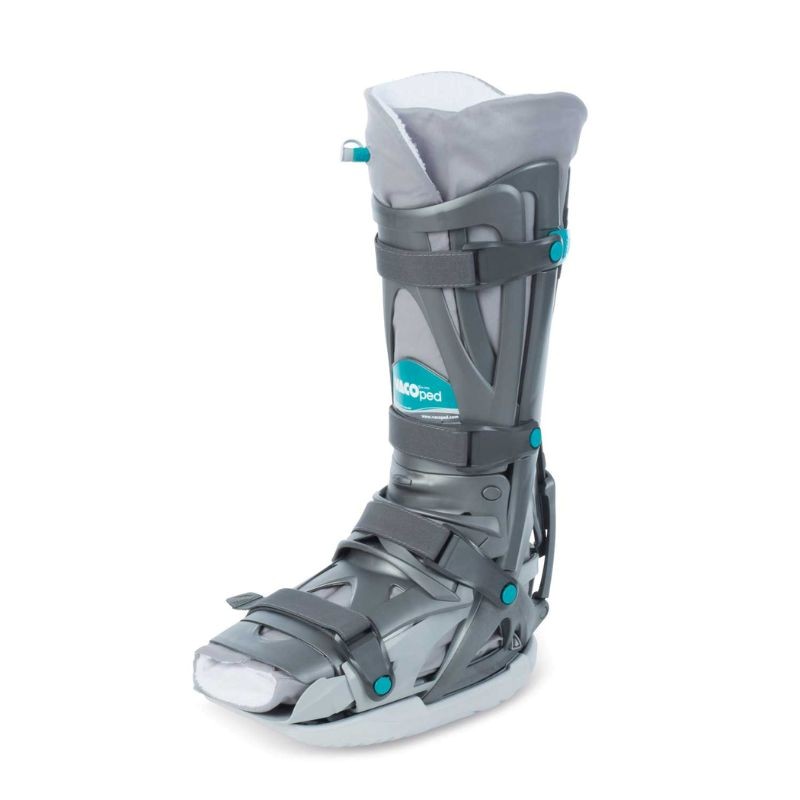
Tendon ruptures can be treated in a specialised boot (VACOped) or with surgery. We will discuss the advantages and disadvantages of both methods and together decide which is best for you. Reviews of the available evidence suggest that surgical repair can lead to a quicker recovery and there is less chance of re-rupture.
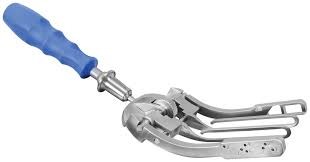
When performing surgery, we use a minimally invasive technique using the Arthrex PARS device which allows the operation to be performed through a small 2.5cm incision, lessening the chance of wound problems, nerve damage and adhesions.
Rehabilitation
Your recovery will be supervised by your surgeon and a dedicated physiotherapist following and agreed protocol. We advocate early weightbearing and a progressive programme of exercises, allowing you to do more as time passes.
A return to sports can be anticipated at about 6 months.
More Conditions


